Designer's Good Week – awards gala
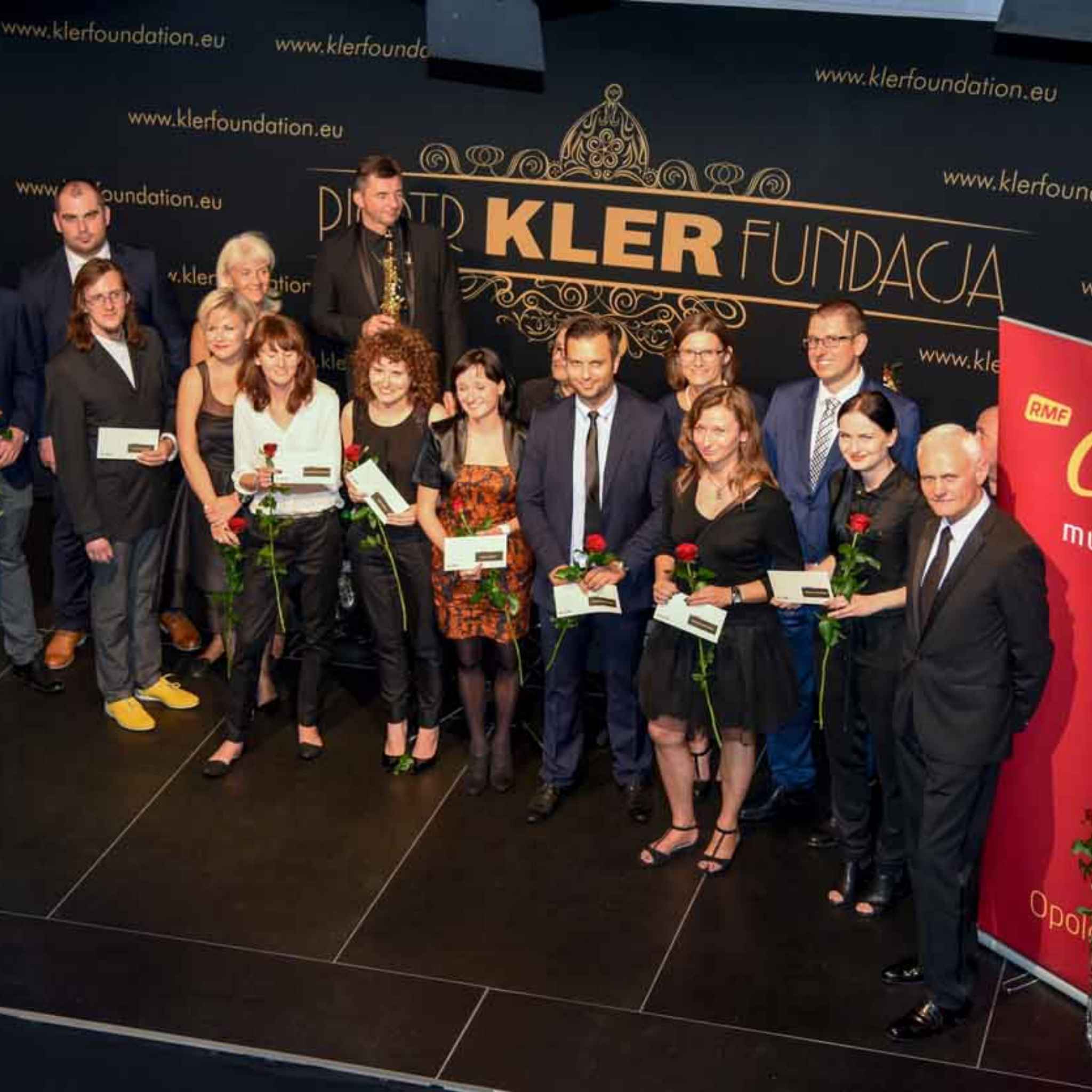
The fourth edition of the Good Designer's Week Workshops concluded with a truly festive ceremony. The scholarships were awarded on September 18th this year at the Opole Philharmonic, during Piotr Kler's annual scholarship gala.
The Good Designer's Week Workshops took place from September 1st to 8th this year. Participants included the winners of the 8th edition of the "Vision of Leisure" Competition, organized by Dobroteka for the Piotr Kler Foundation. Eight young designers, working in randomly selected teams of two, collaborated with four furniture companies (Kler, Halupczok, M+Meble, and Ragaba) to develop furniture prototypes in a Scandinavian style. Eight designs were created during the Workshops, and four of them were brought to life.
The Competition Jury, comprising architect Romuald Loegler, architect Ewa Kuryłowicz, Ewa Gołębiowska, architect Witold Szymanik, Piotr Kler, Magdalena Kiełkiewicz, and Katarzyna Pełka, selected the winner from the resulting designs and prototypes: the Mjuk sofa created in collaboration with Patrycja Kryszczuk and Katarzyna Szczesna with Kler, the Bojle storage system created in collaboration with Iwona Lisiecka and Kinga Pawlik with Halupczok, the Hoppi modular shelving units created in collaboration with Małgorzata Łyszczarz and Iwo Reszczyński with M+Meble, and the Slajd table created in collaboration with Joanna Walkowiak and Wojciech Szczupak with Ragaba.
In this year's eighth edition of the "Scandinavian Functionalism" Vision of Leisure Competition, the team of Małgorzata Łyszczarz and Iwo Reszczyński won the main prize: a scholarship of PLN 9,000. The shelving units and chests of drawers designed by this team, and the realized modular shelving system, received very positive comments from the Jury members:
Magdalena Kiełkiewicz: "A difficult choice... I am glad that the laureates of the first part of our competition had the opportunity to implement and prototype their designs, and to face the realities of implementation. These works already show how many details they had to consider and what kind of responsibility they had to face in meeting the competition brief. All the works pleasantly surprise with their level, and with minor ergonomic or aesthetic corrections, they could be mass-produced. I consider the best executed and thought-out work to be (...) the shelving system and the chests of drawers in the visualizations. The interesting and simple, almost minimalistic form of the frames and shelves allows for a flexible approach to user needs. An additional advantage is the well-thought-out color palette proposed in the design. This project perfectly aligns with the aesthetics and history of Scandinavian furniture – modest, natural, and effective at the same time. This uncomplicated, undemanding, and relatively inexpensive-to-produce set of elements, prepared for sale as a system rather than a single product, perfectly matches IKEA's production philosophy and allows for the expansion of this system with additional products. This project fills a gap in the Polish market, where, apart from the IKEA system, there is no ready-made furniture of this type available for regular sale at an attractive price. The second work by the same team (without a prototype) is also an interesting proposal for furniture with openwork doors and an extension, modernly referencing the form of a traditional dresser."
Katarzyna Pełka: "(...)My favorite is the shelving unit, which, despite its simple construction, is an original solution. The design is systemic, allowing for arbitrary configuration. Moreover, the model was executed to a very high standard, and despite the use of such simple materials as plywood, it held its own aesthetically (...)."
Piotr Kler: "(...)Although upholstered furniture is close to my heart, I must cast my vote for cabinet furniture. I choose the shelving unit designed by Team D (Małgorzata Łyszczarz and Iwo Reszczyński) for the award. It is functional furniture that can exist in interiors as a set, but individual elements would also fulfill their function well and hold their own aesthetically as independent pieces. The shelving units can function as a wall system or as an element in an open space dividing the interior. In the realization, due to limited time, simple, readily available materials were used, but with great care for aesthetic finishing. When launching it on the market, a more technologically complex offer could be presented to position the furniture at a more exclusive level. The shelving unit allows for self-composition of sets, which increases its functionality. In addition to a living room, it can also be used in a youth room or an office."
The other teams received scholarships of PLN 2,000. The Workshop participants presented the Jurors with a difficult task – choosing the best work from pieces that all demonstrated a consistent, very high level in terms of both design and execution. Mr. Witold Szymanik perfectly commented on the level of the designs and prototypes: "First and foremost, I would like to congratulate the organizers! The results of the workshop participants' work are impressive. All the furniture can practically go into production immediately. As it turns out, in the first stage, we were able to identify talented individuals and make an accurate selection of potential workshop participants."
All prototypes were presented on September 18th during the annual gala of Piotr Kler Foundation scholarship holders at the Opole Philharmonic. They will also be presented at next year's Arena Design in Poznań. However, the benefits
of participating in the Workshops will be significantly greater – some manufacturers plan to introduce the furniture created during the Workshops into their commercial offer, hoping for market success. There is a real chance for this, as many guests at the Piotr Kler Foundation's annual gala were interested in purchasing the presented prototypes.