
How to get rid of sleep problems?
How to get rid of sleep problems?
Do you have trouble sleeping? Check what makes it difficult for you to sleep
Do you have trouble sleeping? Do you have difficulty falling asleep or do you wake up at night? Don't you know what could be causing it? The causes of insomnia are sometimes truly trivial and easy to eliminate. Learn about the most important ones. And we'll tell you how to eliminate them.
Sleep problem #1: stale bedding
If you have trouble sleeping, first check if you are properly caring for your bedding. Inadequate hygiene of bedding can lead to the development of dust mites. Dust mites are microscopic arachnids that thrive in our duvets and pillows. Dust mites are invisible to the naked eye, so we are unaware of their presence. However, they have a negative impact on our health. Their presence can make breathing difficult, cause coughing, runny nose, and even rashes. Dust mites particularly favor bedding that is rarely changed or not properly cleaned. Therefore, it is worth ensuring that the pillowcases and sheets we use are clean, fresh, and fragrant. This will effectively deter unwelcome guests.
Solution: Invest in the best quality bedding that will not cause allergies and will prevent the development of dust mites. Choose products that are easy to keep clean. Bed linen should be washed at least once a week, preferably at 60 degrees Celsius. A few drops of essential oil, such as eucalyptus or lavender, can be added to the laundry detergent. This will not only help remove dust mites but also give the bedding a beautiful, relaxing scent and help you fall asleep.
Sleep problem #2: poorly chosen bed and mattress
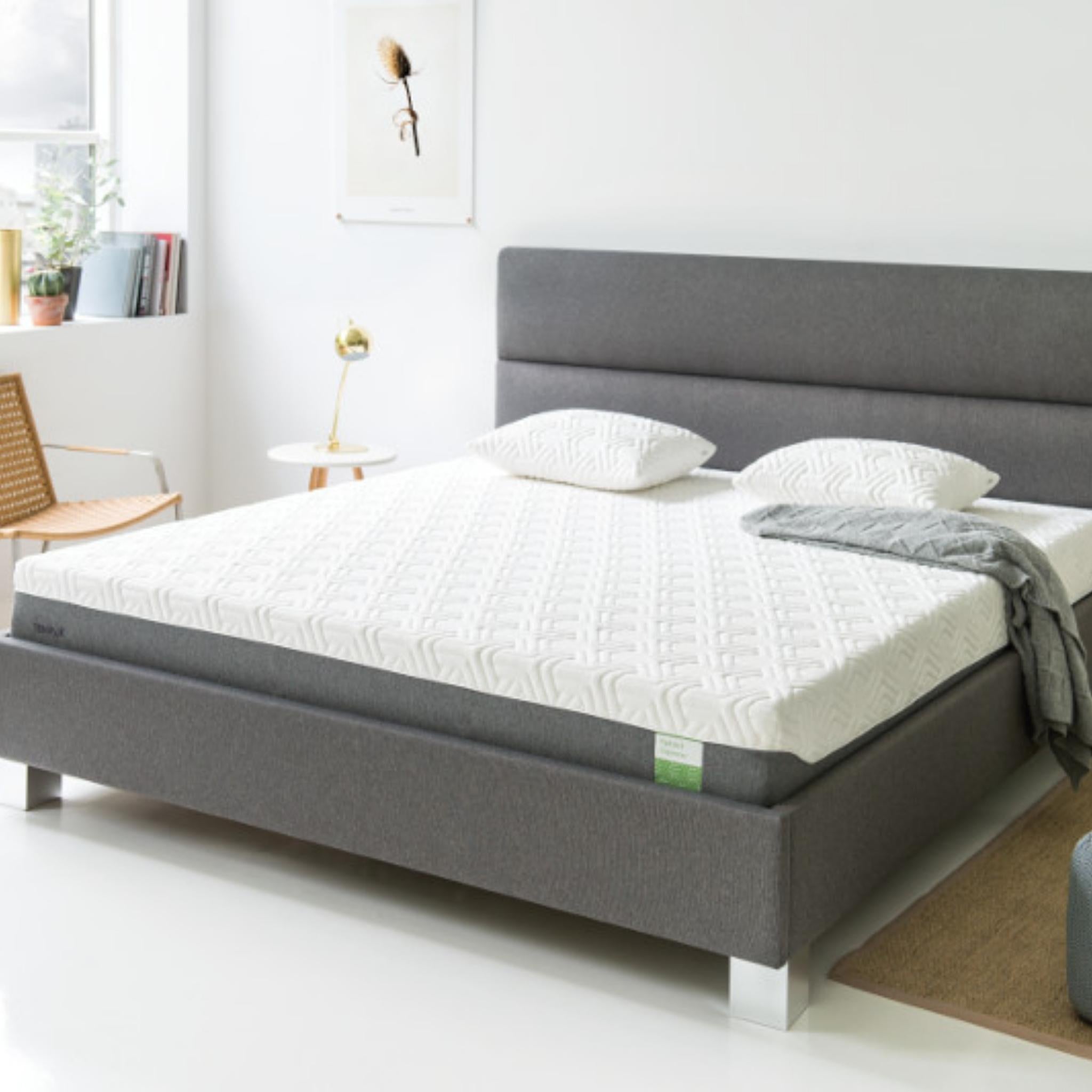
"Hard bed, hard sleep" – as it was once said. Indeed, in the past, it was believed that the harder the mattress, the better. Today, it is known that the issue is much more complex. A mattress must be chosen according to body weight so that the user's spine is always in a straight line. A mattress that is too soft, too hard, or too old can make it very difficult for us to fall asleep. However, this is not the only problem. The mattress has a great impact on our health. The condition of our spine, muscles, and even respiratory system largely depends on the choice of mattress. A poorly chosen mattress can cause allergies and rashes. Many problems with the musculoskeletal system originate from an improperly chosen bed.
Solution: Invest in the best mattress, remembering that it is an investment in your health. Your well-being during the day largely depends on what you sleep on. You will quickly notice that on a well-chosen, comfortable mattress, you will fall asleep much faster and wake up better rested. The mattress cannot be old, even if it seems very comfortable to us. An average quality mattress needs to be replaced after about six years. Products from reputable companies retain their properties longer. However, for hygienic reasons, every mattress is recommended to be replaced with a new one after 10 years. If the mattress was bought recently, but when lying on it you feel springs or hear them creaking, it also means it's time to replace it with a new one.
Also remember that a mattress, even of the best quality, cannot lie directly on the floor. It should be on a bed or a slatted frame, so that the material it is made of can "breathe" and not retain moisture. Moisture has a very bad effect on the structure of the mattress and, as mentioned earlier, causes the multiplication of dust mites.
Sleep problem #3: misunderstood physical activity
Do you think physical exertion will help you fall asleep? You are right. Outdoor activity and light fatigue are excellent remedies for insomnia. However, excessively heavy workouts, especially performed in the evening, can make it difficult to fall asleep. This is because intense exercise raises blood pressure and body temperature. Therefore, it can have a stimulating effect on us.
Solution: In the evening, opt for light physical activity. A brisk walk at a moderate pace would be an excellent solution. It will oxygenate your body and help you relax after an eventful day. What is very important, being outdoors and having contact with natural light have a positive effect on natural sleep-wake cycles.
If you engage in competitive sports or enjoy dynamic exercises, it doesn't mean you have to give them up to get enough sleep. Simply plan your workout to finish 2-3 hours before bedtime. After your workout, eat a light meal rich in protein.
Sleep problem #4: too much light
Nightlights, even with a delicate and subtle glow, can make it difficult to fall asleep. Falling asleep with the TV on is also a bad idea. Evolutionary conditioning means that light always stimulates our brain to be awake. If you live near a busy, brightly lit street or have a street lamp right outside your window, this can also have a negative impact on your sleep. This is true even if you think you have already gotten used to sleeping with light. Remember that even if you think a certain factor doesn't bother you falling asleep, your brain may react to it with arousal.
Solution: When you go to bed, turn off nightlights, the TV, and your computer. Do not go to bed with a laptop or tablet. Contrary to appearances, LCD displays and touchscreens are quite strong sources of light.
If you live in a city or near a busy street, invest in good curtains or blinds. Try to choose a way to cover your windows that does not cut off the supply of fresh air. Even ordinary roller blinds can be a good idea. Try not to stay in brightly lit rooms in the evening.
Sleep problem #5: delaying morning wake-up
Do you hit snooze on your alarm in the morning, and then reset the wake-up time several times? Be careful! You'll feel even more tired, and in the evening, you might have trouble falling asleep. This way of waking up disrupts natural sleep cycles. Remember, if you sleep too little, an extra few minutes certainly won't help you and will only irritate you unnecessarily. So, instead of sleeping in in the morning, just go to bed earlier.
Solution: Get up as soon as the alarm rings. Do it even if you feel sleepy and tired. Contrary to popular belief, you'll feel better getting out of bed immediately than sleeping in and waking up every few minutes. Ideally, right after getting out of bed, take a refreshing shower and prepare a delicious breakfast that will put you in a good mood.
Skipping the snooze option will give you a few extra minutes for your morning preparations. You'll quickly see that even such a short time makes a big difference in the morning rush. You'll also have the satisfaction of starting the day with a small success.
The article was written in cooperation with TEMPUR Sealy – a manufacturer of hybrid technology mattresses.



Comments