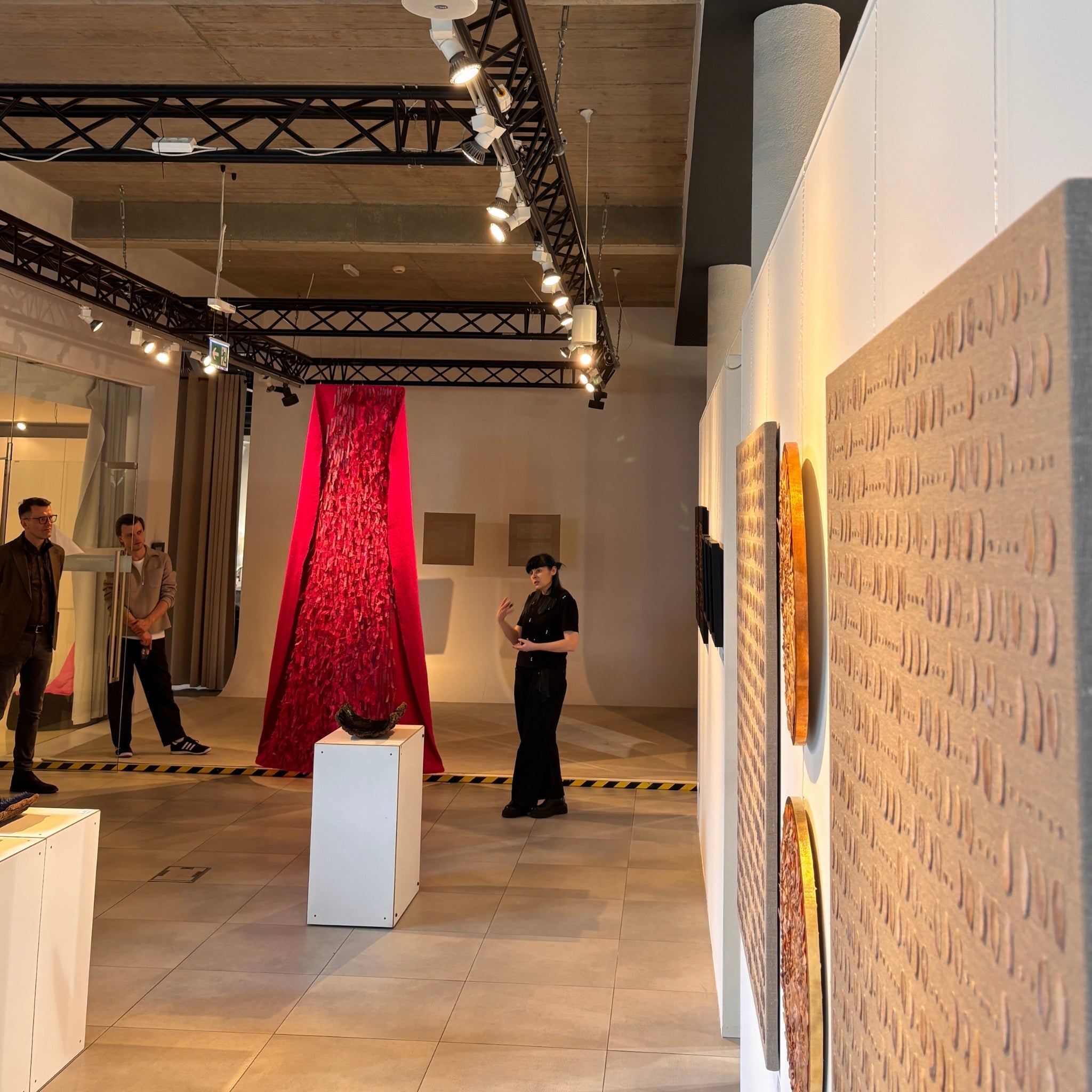
Exhibition of works by ASP students from Krakow.
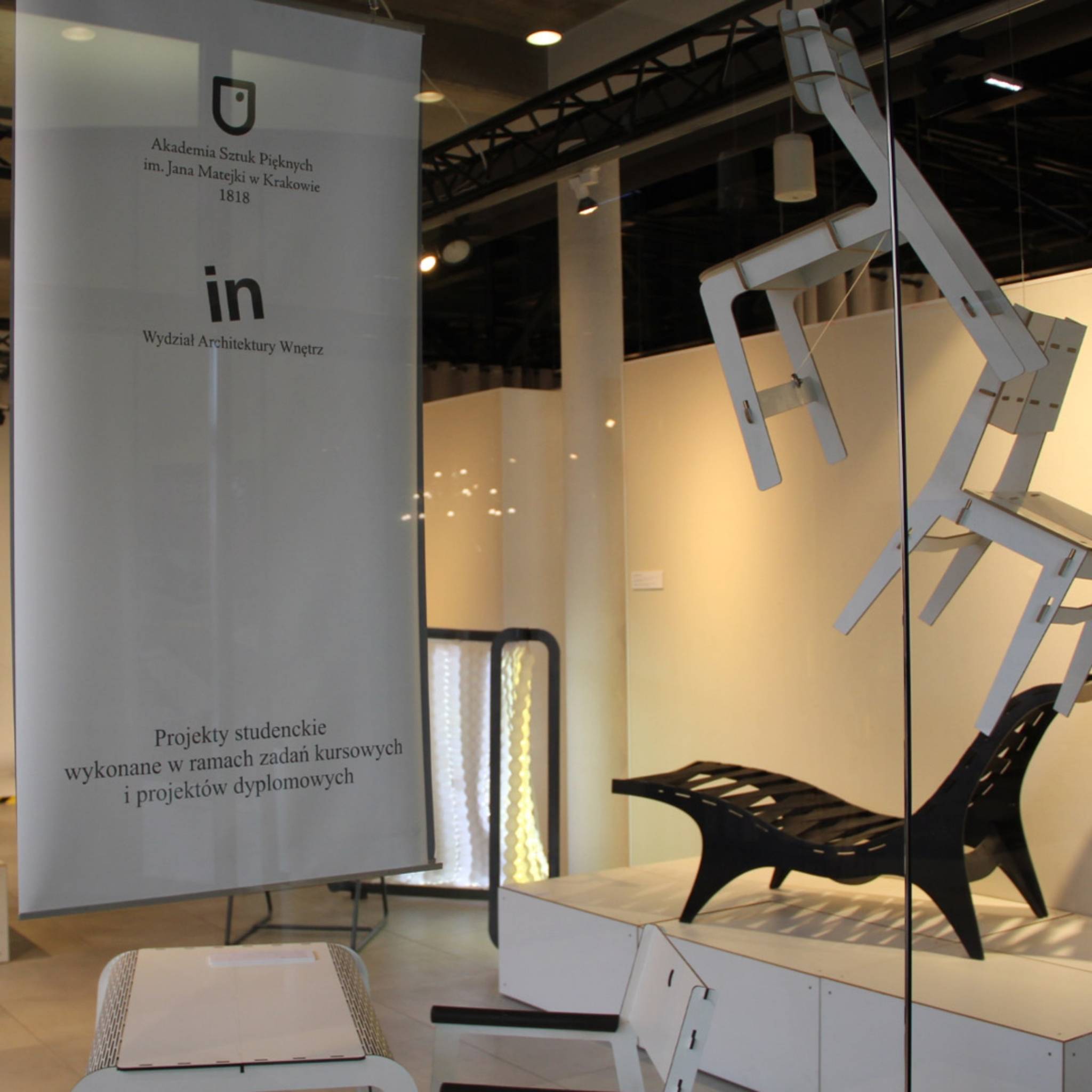
Exhibition of the Academy of Fine Arts from Krakow.
We invite you to the Art Exhibition Gallery in Dobroteka. We are hosting a unique exhibition here – furniture prototypes that have been created over the last three years, serving as semester and diploma projects by students of the Faculty of Interior Architecture of the Jan Matejko Academy of Fine Arts in Krakow. The projects were developed in the Department of Furniture and Interior Design.
Unique lamps, original armchairs and chaises longues – these are just some of the exceptional pieces of furniture that can be seen at the exhibition by students of the Faculty of Interior Architecture of the Jan Matejko Academy of Fine Arts in Krakow. The furniture presented at the exhibition consists of prototypes made over the last three years as semester and diploma projects by students of the Faculty of Interior Architecture of the Jan Matejko Academy of Fine Arts in Krakow, as part of their work in the Department of Furniture and Interior Design. The exhibition can be viewed on the first floor of the Tetmajer 83 Gallery. The authors of the furniture presented at the exhibition are: Dominika Gulińska, Magdalena Jankowska, Kamila Mika, Edyta Ptasznik (I Studio of Furniture and Interior Design, supervisor: Prof. Roman Kurzawski), Blanka Kurdyś (I Studio of Furniture and Interior Design, supervisor: Dr. Łukasz Sarnat), Agata Jaworska, Jadwiga Pogroszewska (II Studio of Furniture and Interior Design, supervisor: Dr. Marek Błażucki, ASP Professor), Agata Dąbek (III Studio of Furniture and Interior Design, supervisor: Dr. Tomasz Wójcik, ASP Professor).
Original exhibits
One of the exhibits is an original collection by Blanka Kurdyś. The inspiration comes from nature – a three-leaf clover. Moreover, its clean, minimalist form fits perfectly into any space. The soft light, gradually fading at the top, evokes associations with a "home hearth". Additionally, the lamp can be rotated vertically, changing the direction of light.
The Press furniture series was designed for CNC milling technology and for joining individual elements using glue or mechanical connectors. Its authors are Edyta Ptasznik and Magdalena Jankowska. The most important assumptions of the project are the economical use of material, ergonomic shape, and ease of joining individual elements. Additionally, the chairs and table were designed in the spirit of rational material use and ergonomics, as well as creative thinking about the form of objects.
An original project is the combination of an armchair with a footrest. Additionally, these two elements can function separately. Furthermore, the armchair was designed in such a way that the footrest can be placed on it. This results in a completely new piece of furniture with a different seat angle. This set is the work of Jadwiga Pogroszewska. Another exhibit is a light, openwork chaise longue by Dominika Gulińska. Black rubber straps were used for its construction. There is also a designer armchair and lamp by Agata Jaworska. The inspiration for this project was a detail. We are talking about the original structure of the fabric, which is filled with bubbles. It was used as a seat and a glowing screen. Additionally, the exhibition features Kamila Mika's diploma project. The structure of the black chaise longue is cut from plywood. Moreover, the original design is given to the seat by tubes covered with EVA foam. Department of Furniture and Interior Design
The aim of the Department of Furniture and Interior Design is to prepare students for independent, professional design activity in the field of designing furnishing elements – particularly furniture, but also broadly understood design – and cooperation with contractors and industry. The didactic program is a series of tasks with increasing functional and technological complexity. Often, these are based on a given technology, specific purpose, and specific recipient. Furthermore, in their diploma thesis, students present the sum of knowledge and skills acquired during their studies and their own design personality. Additionally, the creative process is divided into three phases. The first is the research phase, consisting of identifying design, technological, cultural, etc. problems. The design phase, in turn, progresses from sketches through virtual models, reductive models, and full-scale models. The final stage is the implementation phase – prototyping based on the departmental model laboratory and external contractors. An integral part of each design is the technical documentation, model or prototype, and project presentation.
We warmly invite you to visit the exhibition!